“We don’t have work. We just grow a little tobacco: Household economy and ritual effervescence in a Macedonian town”
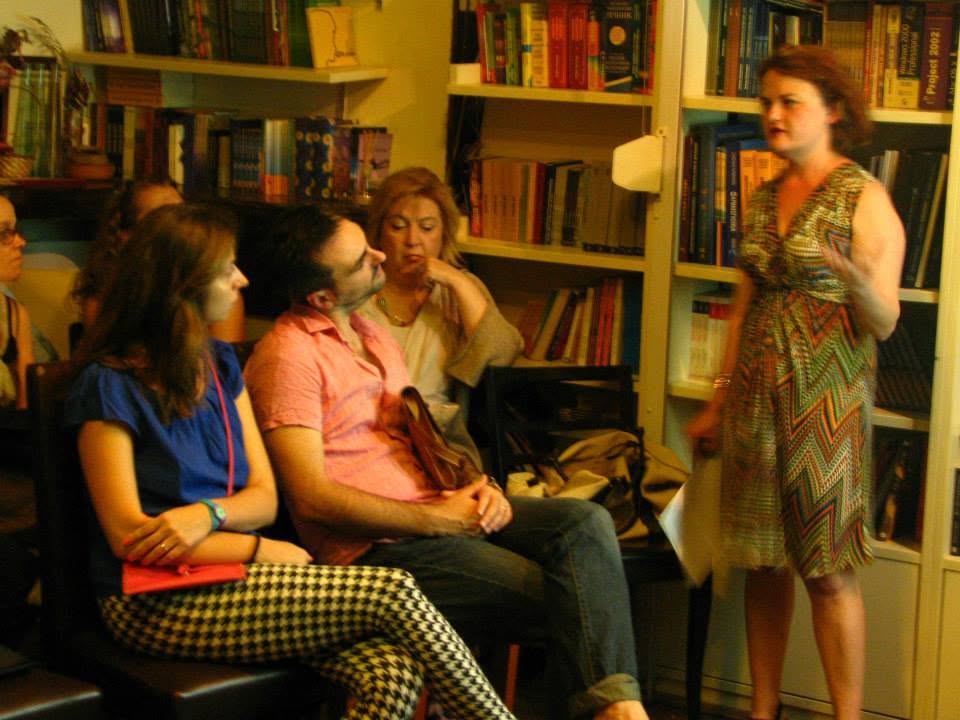
The Center for Research of Nationalism and Culture announces the lecture by Miladina Monova, “We don’t have work. We just grow a little tobacco: Household economy and ritual effervescence in a Macedonian town”.
The lecture will be held on 19 July 2014 in the Magor Book Cafe in Skopje (start: 20.00). The lecture will be held in English.
ABSTRACT:
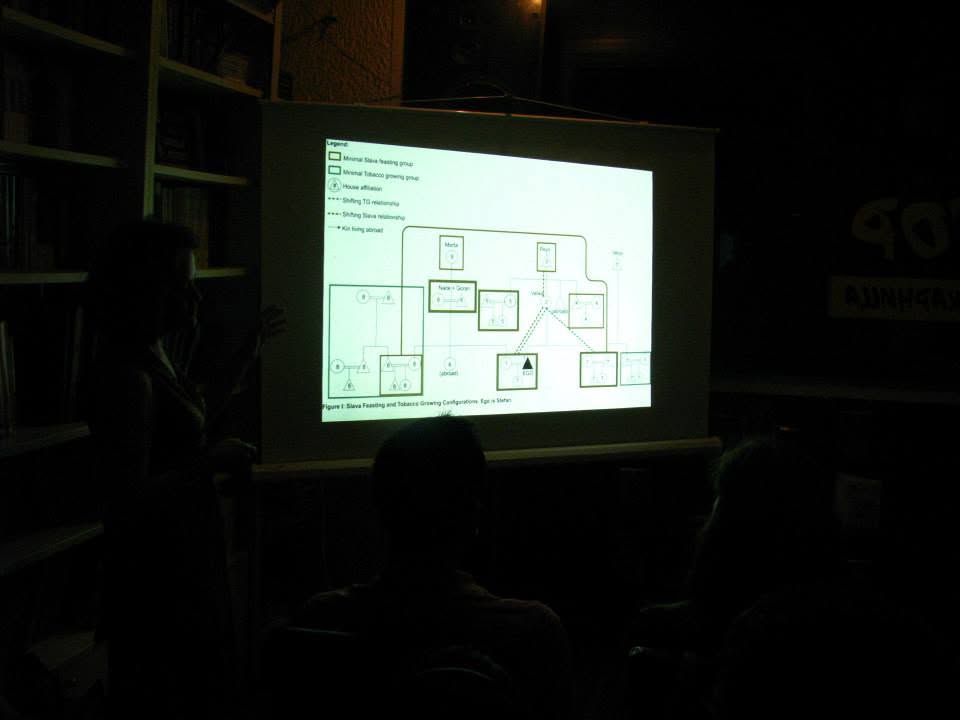
This presentation explores changes within household economy in the postsocialist town of Prilep, and the way in which these transformations mirror changes in social and ritual relationships. In a context of economic hardship, former factory workers holding casual jobs, often within the grey economy, retreat into the household economy, and therefore rely more on kinship and friendship relationships than they ever did during socialism. Tobacco growing is the seasonal activity occupying most of Prilep’s households. But is not only an economistic response to the cyclical social demand for cash. When asked about their spending patterns, or how their incomes were allocated to different budget heads of households systematically placed ritual celebrations among top priorities. Yet people did not want to reduce the number of such celebrations they classified as “unavoidable” and “expensive”.
In this presentation I will show how If more and more families in Prilep combine casual jobs and factory work with house-based tobacco growing, this is also because they need to invest more heavily in ritual activities. Households need to raise cash for rituals, which in turn secure the social relationships that provide access to jobs in the industrial sphere and the wider economy.
ABOUT MILADINA MONOVA:
Dr. Miladina Monova holds a doctoral degree in Social Anthropology from the École des Hautes Études en Sciences Sociales, Paris. Her dissertation is titled “Roads of Exile, Narratives of No Return: Aegeans in the Republic of Macedonia”. Her current academic and teaching interest is economic anthropology, and her past interests have been focused in refugee studies, war identities, trans-border relations and kinship networks, collective/individual memory, and the uses of the past in Balkan countries (Greece, Macedonia). She has also researched in labelling theory (practices of nomination and classification of individuals and groups) and linguistic anthropology (politics and language ideologies in Europe).
Dr. Monova held a teaching assistantship in ethnographic methods in sociology and anthropology, urban sociology, writing sociology, and history of French sociology between 1918 and 1970 by Université des Sciences et Techniques (Lille I), France (2003-2004). She also held various research fellowships awarded by Ecole Française d’Athènes (EFA), Greece (2006-2007; 2004-2005); Collegium Budapest, (Institute for Advanced Study), Hungary (2005-2006); and by the Center for Advanced Studies – Sofia, Bulgaria (2008). She has published widely in French, English, Macedonian and Greek in both local and international academic editions. She is Member of the editorial board of the academic journal “Balkanologie” and member of Laboratoire d’Anthropologie des Institutions et Organisations Sociales (LAIOS), CNRS-EHESS.
Currently, she is a research associate at the Max Planck Institute for Social Anthropology.
This lecture comes out of her post-doctoral research in the framework of the 3 year project “Economy and Ritual in Post-socialist Eurasia”. A publication of a paper is forthcoming on Berghahn Books.